CONGRATULATIONS TO OUR CLASS OF 2026 INDUCTEES!
Making a Mark in Blues History
The Blues Foundation’s Blues Hall of Fame honors those who have made the Blues timeless through performance, documentation, and recording. Since its inception in 1980, The Blues Foundation has inducted new members annually into the Blues Hall of Fame for their historical contribution, impact, and overall influence on the Blues. Members are inducted into the Blues Hall of Fame in five categories: Performers, Individuals, Classic of Blues Literature, Classic of Blues Recording (Song), and Classic of Blues Recording (Album). Since 1980, The Blues Foundation has inducted over 400 industry professionals, recordings, and literature into the Blues Hall of Fame. Of the 130 performer inductees, 120 of them are African-American.
An anonymous committee of Blues scholars and experts representing all subsets of Blues music convenes each year to review potential Blues Hall of Fame candidates. Recommendations are shared with the committee via The Blues Foundation offices, but we do not accept active campaigns for any potential inductee in order to keep this process fair, devoid of political overtones, and based upon actual contributions rather than individual popularity. Candidates selected for induction are determined exclusively on their body of work over their lifetime. Names of all inductees are released to the public each spring. The Blues Foundation hosts a special Blues Hall of Fame Induction ceremony, held annually on the evening before The Blues Music Awards, as a ticketed event open to the public.
Blues Hall of Fame Museum
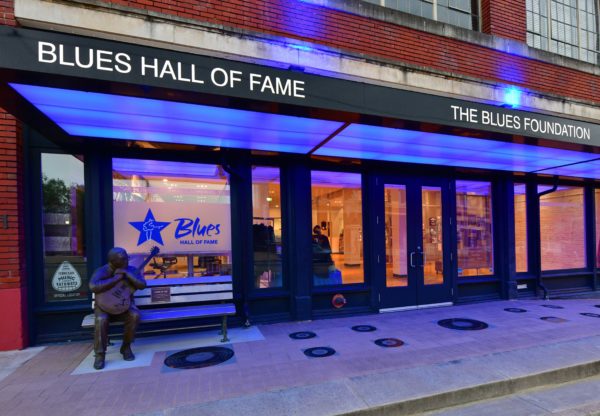
Opened on May 8, 2015, the Blues Hall of Fame Museum serves the community as a center for people to enjoy physical exhibits honoring the legends of Blues. Located in downtown Memphis – across the street from the National Civil Rights Museum – the museum holds the history and music of Blues greats for visitors to enjoy year-round.
The Blues Foundation’s 2026 Blues Hall of Fame Inductees
Blues Hall of Fame Inductee biographies and descriptions were researched and written by Jim O’Neal (bluesoterica.com) with thanks to Bob Eagle, Bob McGrath, John Broven, Roger Armstrong, Larry Cohn, Malaco Records, and Roger Naber.
Performers

Kenny Neal was born into the blues as the eldest son of veteran Baton Rouge harmonica player Raful Neal, and not only has he proudly carried the tradition on, but he also has ensured its legacy by surrounding himself with siblings, nieces, nephews, cousins and children who play or sing with him or perform on their own. With eight of the family participating, Neal’s aptly titled Bloodline album took top honors in the 2017 Blues Music Awards, one of five BMA wins Neal has notched. He is the only blues artist to have won awards as a musician, an actor and a TV host.
Neal, born in New Orleans on October 14, 1957, grew up in the Baton Rouge area absorbing blues not only from his father but from a musical circle that included Blues Hall of Famers Slim Harpo, Lazy Lester, and many others. Buddy Guy left Louisiana just weeks before Neal’s birth but was a longtime friend of Raful and hired Kenny to play bass in his band in Chicago and on tour. The experience inspired Neal to hone his guitar chops and put together a Neal Brothers Band that found a home base in Toronto backing the stars that came to town, including Guy, Junior Wells and Big Mama Thornton. Neal, a charismatic live performer, enhanced his reputation in a stint with the Downchild Blues Band before returning home.
Florida songwriter-producer Bob Greenlee recorded Neal’s first albums on King Snake and Alligator. Neal’s discography steadily grew with releases on Telarc, Blind Pig, Ruf, Cleopatra Blues, his own Booga Music imprint, and other labels. He also played guitar or harmonica on sessions with his father, his sister Jackie Neal, Lazy Lester, Rufus Thomas, Tab Benoit, Debbie Davies, Tito Jackson, and others, including Sonny Rhodes, whose lap steel guitar playing inspired Neal to take up the instrument. An impromptu acoustic album recorded in France with Billy Branch won a W.C. Handy Award in 2005. He also earned a Theatre World Award for his acting debut in the Broadway play Mule Bone in 1991 and later received awards for a TV program, Neal’s Place, he hosted while living in Palo Alto, California, when he was on hiatus to recover from hepatitis C. His struggles with the illness led him to compose the song “Let Life Flow,” which was voted Blues Song of the Year in 2009.

Bob “Steady Rollin’” Margolin established instant credentials in the blues world when he joined the Muddy Waters band in 1973 and continued to build an impressive resume in the nearly seven years he toured with Muddy and afterwards. Margolin has won Blues Music Awards in three different categories: Acoustic Blues Album, Traditional Blues Male Artist and Blues Instrumentalist—Guitar.
Born in Brookline, Massachusetts, on May 9, 1949, Margolin started playing guitar as a teenager and recorded a psychedelic album with the group Freeborne in 1968. Blues came to be his specialty, however, and he played in ex-Muddy sideman Luther “Georgia Boy” Johnson’s band, the Boston Blues Band and other units. One night in August 1973 he snared a front-table seat at a Muddy Waters show in Boston. Harmonica player Mojo Buford informed him that Muddy had just fired guitarist Sammy Lawhorn, and Margolin was hired the next day after an audition at Muddy’s hotel room. In addition to touring the world with Muddy, he recorded on The Muddy Waters Woodstock Album and Muddy’s four albums on Blue Sky produced by Johnny Winter. He joined Muddy onstage at The Band’s famous Last Waltz concert and has since been featured in assorted tributes to Muddy in person and on CD and DVD. Along the way he has played on albums by Winter,
Koko Taylor, Junior Wells, Bob Corritore, Henry Gray, Eric Clapton, Diunna Greenleaf, Ann Rabson, Nappy Brown, the Nighthawks, John Brim, Billy Boy Arnold, Sunnyland Slim and Muddy’s son Big Bill Morganfield, among others. He has toured extensively with assorted aggregations after moving from Boston to Washington, D.C., then Virginia and finally North Carolina.
Margolin’s first CDs came out on the Powerhouse label, followed by more on Alligator, Blind Pig, Telarc, his own Steady Rollin’ label, and Vizztone. In addition to serving as a partner in Vizztone, he works with the Pinetop Perkins Foundation mentoring young musicians and is the co-author of two instruction books with Dave Rubin Margolin’s insightful way with words has extended to songwriting and to penmanship in blues publications, his own eBook and his informative website. In 2013 the Blues Foundation presented him with the award for Keeping the Blues Alive in Journalism. In print and his music, he has continued to enhance his own stature while honoring his days with Muddy and many others with gratitude and respect—as reflected in the title of his album, Thanks.
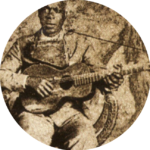
Henry “Ragtime Texas” Thomas was one of the first generation of Black songsters and blues performers to record, already in his fifties when he first went into the studio for the Vocalion label in 1927. His 1927-1929 recorded repertoire of 23 songs largely predated the blues and included reels, ballads, rags, spirituals, waltzes and minstrel songs, performed as dance music set to his rhythmic guitar picking and strumming and the unique melodies he played on pan-pipes made from cane.
Documented history on Thomas is scant, but Texas folklorist and historian Mack McCormick undertook dogged research efforts that led him to some Thomas cousins and to railroad employees who remembered him—a task complicated by the fact that in Thomas’ era there seemed to be a guitarist playing for tips at every depot. Thomas, an inveterate railroad traveler, made his living hoboing from town to town through Texas and beyond; he announced stops all the way to Chicago in “Railroadin’ Some.” According to relatives, Thomas came from the Big Sandy area of Upshur County, and his birthdate was recorded in a family bible as 1874. His parents had been slaves. McCormick suspected that a street singer he heard in Houston in 1949 might have been Thomas, but proof eluded him, and Thomas reportedly died around 1950.
Thomas never recorded again after 1929. But his sounds have lived on in reissue albums and in pop culture—in the music to Canned Heat’s 1968 hit “Going Up the Country” (borrowed from Thomas’ “Bull Doze Blues”) and as part of the background soundtrack in scenes of the 2023 film Killers of the Flower Moon, among other examples. Bob Dylan, the Lovin’ Spoonful, Taj Mahal, Dom Flemons and others have recorded his songs. Thomas is now recognized as an iconic figure in Americana, and as McCormick wrote, among all the early blues recording artists, “It is Henry Thomas who offers the deepest look at the roots of Black traditions.”

Rosco Gordon was a hitmaking blues headliner early in his career but retreated from public view to run a business and raise a family, only to re-emerge when he learned his historic early records had attracted a new generation of fans. Gordon’s hits, most notably “Booted,” “No More Doggin’,” and “Just a Little Bit,” made the Billboard charts sporadically from 1951 to 1960. He also influenced ska and reggae music when Jamaican musicians picked up the distinctive rhythm of his piano playing.
Memphis was Gordon’s birthplace, on April 10, 1928, although the family lived in the Mississippi Delta during some of his earliest years. Billy “Red” Love mentored him on piano and later led Gordon’s road band. Before he began recording at Sam Phillips’ studio in Memphis in 1951, he worked as a shoe shine boy and in a lumber mill. Phillips at first recorded him for RPM Records, then for Chess and a few years later for his own Sun label. To settle a conflict between RPM and Chess when “Booted” appeared in both labels and reached No. 1 on the R&B charts for RPM in 1952, rights to Gordon’s tracks went to RPM and in exchange Howlin’ Wolf became an exclusive Chess artist.
He was the first bluesman to record for Duke Records, followed by Johnny Ace, Bobby Bland and Earl Forest. Several of their releases bore the label credit “With the Beale Streeters,” a name also used in Duke’s publicity (and cited in Gordon’s obituaries). However, several different musicians played on these sessions and it was not a true band outside its various studio assemblages. In Gordon’s words, “There was no such animal as the Beale Streeters.” Gordon toured the country as a featured attraction or on big R&B package shows whenever his records hit the charts, working other jobs in between. His last year of extensive touring, on the strength of his Vee-Jay hit “Just a Litte Bit” was 1960. Blessed with a flair for comic novelty, Gordon once toured with a live chicken as part of his act after he recorded “The Chicken” for Sun, while his first hit was titled “Saddled the Cow (And Milked the Horse).”
Gordon, however, was frustrated at his lack of income from the record business. Problems with copyrights, the musicians’ union and legal proceedings all hampered his career. He moved from Shreveport, Louisiana, back to Memphis and then in 1962 to New York, where he and his wife, singer Barbara Kerr, raised three sons. Gordon did not stop writing songs or recording but he curtailed his personal appearances to work in his cleaning business, which he claimed to have won in a poker game. He recorded for ABC-Paramount and other companies and started his own Bab-Roc label to release 45s, but none of his later records enjoyed chart success. Reissues of his 1950s sides in England and a 1980 interview by Hank Davis in Living Blues magazine brought him to the attention of blues fans worldwide, and in the years to follow he played festivals and nightclubs and recorded albums for JSP, Stony Plain, Dualtone and the legendary reggae label Studio One. In May 2002 his appearance with B.B. King, Ike Turner and Little Milton at the W.C. Handy Awards was filmed for a documentary, The Road to Memphis. But Gordon did not live to see the program televised. He died of a heart attack in Queens, New York, on July 11, 2002.
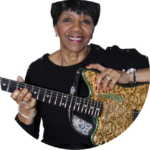
Barbara Lynn burst on the national scene as a 20-year-old ingenue in 1962 when her self-penned R&B ballad “You’ll Lose a Good Thing” peaked on Billboard magazine’s charts as No. 1 in R&B and No. 8 in pop. The rival Cash Box charts ranked it No. 2 R&B and No. 4 pop. Although it was her warm, appealing vocal style that was spotlighted on this and several subsequent hits, her act had another dimension that she could feature in her live performances—her talent as a left-handed electric guitarist. That gift, which helped win her a following among blues fans over the years, was exciting enough for her to be featured on an instrumental workout standing side by side with guitar virtuoso Gatemouth Brown on the syndicated TV program The !!!! Beat! In 1966.
Brown was one of her early favorites on guitar along with Guitar Slim, B.B. King, Jimmy Reed and a flamboyant showman from her hometown of Beaumont, Texas, named Curley Mays (Gatemouth’s nephew). But it was seeing Elvis Presley on TV that spurred her to take up the instrument. Her taste in female vocalists ranged from Etta James and Ruth Brown to Brenda Lee, Timi Yuro and Connie Francis. Born Barbara Linda Ozen on January 16, 1942, Lynn formed a high school band, Bobbie Lynn & the Idols. She learned guitar by watching and talking to Curley Mays, Clarence Garlow and Lonnie Brooks, then known as Guitar Jr. As a teenager she was already writing songs and performing in local clubs with bands including Clifton White & the Knights, the Bon-Ton Krazy Kats and the Twisters, billed as Barbara Lynn and her Left-Handed Guitar. Beaumont bluesman and DJ Clarence Garlow tried to get Goldband Records to sign her but the song she auditioned only surfaced decades later on a CD compilation.
Swamp pop singer Joe Barry introduced her to producer Huey P. Meaux, “the Crazy Cajun,” who recorded her for his Eric label before going national with Philadelphia-based Jamie Records and, later, Atlantic, in addition to releasing 45s on labels he owned. The success of “You’ll Lose a Good Thing,” one of her many songs about romantic relationships, led to national tours with her mother traveling with her, and the first of two appearances on American Bandstand. Meaux recorded her Jamie sessions at Cosimo Matassa’s J&M Recording Studio in New Orleans. Joe Barry’s band members played on several songs and a young Dr. John was a frequent participant. Twelve of her singles made the Billboard or Cash Box charts, and one, “Oh! Baby (We Got a Good Thing Goin’),” resulted in a phone call from Mick Jagger asking her permission to record it. The Rolling Stones’ version netted Lynn some welcome royalties, as did numerous covers of “You’ll Lose a Good Thing.”
In the 1970s Lynn took a step back from music to raise a family and moved to Los Angeles, although she still performed and recorded on occasion. She turned down several opportunities to perform overseas because of an aversion to flying, but in 1984 she did record a live album in Japan and another in England in 1999. Reissues in the U.S. and Europe spotlighted her early work while she recorded new albums for Ichiban, Bullseye Blues, I.T,P., Antone’s and Dialtone. Although she had signed away rights to a few of her hit songs, new royalties materialized from samples of “l’m a Good Woman” by Lil Wayne, Moby and others. Honors came her way with a Rhythm and Blues Foundation Pioneer Award, a National Heritage Fellowship, a Star of Texas Folklife Award and induction into the Museum of the Gulf Coast Music Hall of Fame. Back home in Beaumont the street where she lives is now named Barbara Lynn Street.

Marcia Ball induction into the Blues Hall of Fame is only the latest in a series of honors bestowed upon Marcia Ball, already a member of the Austin City Limits Hall of Fame, Museum of the Gulf Coast Music Hall of Fame, and Louisiana Music Hall of Fame as well as recipient of the Darrell K. Royal Texas Music Legend Award and designee as 2018 Official Texas State Musician. Hailed as “Gulf Coast Rhythm And Blues Musical Goddess” by Forbes magazine in 2019, Ball has also won numerous Blues Music Awards and blues readers’ polls and garnered several Grammy nominations.
Had she followed an earlier musical path, Ball, a convincing performer whatever the genre, might well also qualify for the Country Music Hall of Fame. In the 1970s, reviewers called her “Austin’s country music queen,” and one stated that hers was “the best voice in country music since Patsy Cline.” Her first record, a 45 rpm single by Marcia Ball & the Misery Brothers, coupled a Patsy Montana country song with a cover of a New Orleans record by Irma Thomas.
Ball’s vibrant performances and recordings have long embodied the roots music of both Louisiana and Texas. She was born Marcia Ellen Mouton in an Orange, Texas hospital on March 20, 1949, but
her famiy lived just across the state line in Vinton, Louisiana, where she grew up. Older women in the family played piano and Ball started with piano lessons. In college at Louisiana State University she was in a psychedelic rock band called Gum. A planned trip to San Francisco ended up in Austin instead and she sang with—and led—different bands in the city, most notably the progressive country outfit Freda and the Firedogs. Her first album was a country-rock outing on Capitol Records but she began to incorporate more of the New Orleans R&B, soul and blues of Irma Thomas, Allen Toussaint and Professor Longhair along with cajun, zydeco, boogie woogie and Texas blues-rock, which was becoming a trademark of the Austin scene. Among other influences she has also cited Ray Charles, Mickey Newbury, Dan Penn and Delbert McClinton.
From this conglomeration and her own creative, uplifting vision she developed a joyous, exuberant style that celebrated good times but also made room for contemplative moments of reflection and commentary, evidenced in her spirited live performances and in her albums for Rounder and Alligator. She described her last album, Shine Bright on Alligator, as “a ridiculously hopeful, cheerful record,” but one with thought-provoking messages to convey. Two of her albums featured her in triple-threat groups, one with Angela Strehli and Lou Ann Barton on the Antone’s label, and another with her idol Irma Thomas and Tracy Nelson on Rounder. Her resume also includes countless nightclubs and festivals, a prestigious White House performance and numerous television appearances. Her albums have featured dozens of her original songs, some co-written with Stephen Bruton, Gary Nicholson, Michael Shermer and others.
Ball has also undertaken charitable community projects including Housing Opportunities for Musicians and Entertainers (HOME), designed to assist older musicians in need. On October 28, 2025, she announced her retirement from performing due to a diagnosis of ALS (Lou Gehrig’s Disease). At a January 29, 2026, event in support of HOME, Austin Mayor Kirk Watson presented Ball with a key to the city at the Paramount Theatre in warm recognition of her unparalleled contributions to Austin and its growth into a music capital.
Individuals – Business, Production, Media, & Academic
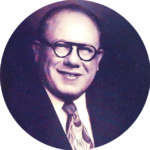
Syd Nathan founded the powerful King label in 1943 and ruled the operation in autocratic fashion until his death in 1968, leaving a wealth of influential records by James Brown, Little Willie John, Hank Ballard & the Midnighters, Wynonie Harris, Freddie King and many other blues, R&B and soul stars along with an impressive roster of historic figures in country, jazz, doo-wop and other genres. Although he added his name (or a pseudonym, Lois Mann) to the composer credits of over 200 songs (as was once a custom among record executives and associates), his crucial role lay not in creative input to the music but in his astute but controversial business practices. Indeed, he voiced vehement objections to some recordings which became hits, including James Brown’s debut. Ultimately however, the great music at King was the result of his hirings and signings. Two of his producers (then known as A&R–Artist & Repertoire–directors), Henry Glover and Ralph Bass, are already in the Blues Hall of Fame, as are numerous artists and recordings on King and its subsidiary Federal label.
Nathan, who was born in Cincinnati on April 27, 1904, worked a variety of jobs, as a salesman, drummer in a Depression-era speakeasy, wrestling promoter, elevator man, busboy and operator of a shooting gallery game that got him busted for “promoting a scheme of chance.” In 1938 he opened Syd’s Record Shop and eventually discovered not only a market for country records but a huge local talent pool. When he launched King Records he recorded only white country artists, but realized there was an underserved audience for Black music as well, leading to blues, jazz and gospel releases first on a new label, Queen, and then on King and various subsidiary labels. Nathan hired a racially integrated workforce, from laborers to studio musicians, at the company’s multi-purpose plant at 1540 Brewster Avenue. Long before Sun Records had white country and rockabilly acts covering Black blues songs and before Stax utilized an integrated studio band, Nathan’s musicians and producers had pioneered both concepts. Sometimes King’s Black performers also recorded country material.
Nathan ran the company from a self-contained facility for recording, record pressing, label and jacket printing and shipping, and developed his own network of distributors around the country. A 45 or 78 could be recorded and quickly pressed in as large or small a quantity as ordered. The system produced hundreds of hits amidst countless records that are now valued for their rarity because the few copies that were pressed failed to catch on.
Nathan’s relationship with James Brown was quarrelsome yet productive, and Brown acknowledged Nathan for supporting his rise to stardom. Opinions varied, but some artists, like Hank Ballard, felt very close to Nathan. After a lifetime of health problems, Nathan passed away in Miami Beach on July 6, 1978. His saga was brought to life in the 2025 documentary King of Them All: The Story of King Records.
As Jon Hartley Fox wrote in King of the Queen City: The Story of King Records, Nathan was a complex character who “could be obscene, loud, greedy and crude” and “abrasive, obnoxious, confrontational, bullying and coarse” on one hand, and an “expansive, fun-loving, joke-telling charismatic guy” on the other. “He was perhaps the perfect specimen of the cigar-chomping record man of the mid-twentieth century who changed American music and, in turn, changed the world.”
Classic of Blues Literature
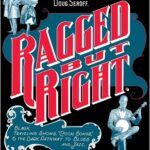
Ragged but Right: Black Traveling Shows, “Coon Songs”, and the Dark Parkway to Blues and Jazz Lynn Abbott & Doug Seroff
Ragged But Right takes its place in the Blues Hall of Fame alongside The Original Blues, the 2023 inductee by the meticulous research team of Lynn Abbott and Doug Seroff. In this 461-page volume the focus is on the pre-blues era when ragtime swept the country and helped bring recognition to Black performers despite the prejudices of the time. Drawing on coverage in the nationally distributed Black newspapers the Indianapolis Freeman and the Chicago Defender, augmented by reports in Billboard and Variety, the authors reconstruct the movements of minstrel shows such as
the Silas Green and Rabbit’s Foot troupes as well as various theatrical revues and tent shows. A popular vocal style of the time was known as “coon shouting,” a genre that at first starred white women performing songs that were “a cunning amalgam of appreciation and mockery.” The idiom grew to feature more Black performers and a change in the objectionable terminology and content, as the authors note: “As late as the mid-1910s the term ‘up-to-date coon shouter’ was routinely applied to the likes of Clara Smith, Ma Rainey and Bessie Smith, but around 1916 they were redefined as ‘blues singers.’”
Classic of Blues Recording – Album

Howlin’ Wolf-The Chess Box
While Howlin’ Wolf’s incomparable music has been documented on dozens of reissue compilations, The Chess Box package from 1991 still stands out. Produced by Andy McKaie as a 5-LP or 3-CD set, the 12-inch box gathers 71 songs and four “Howlin’ Wolf Talks” interview segments. Songs include many classic gems recorded in Memphis and Chicago, remastered for superior sound quality, beginning with his first Chess sides, “Moanin’ at Midnight” and “How Many More Years,” along with previously unissued tracks (two of them showcasing Wolf on acoustic guitar), alternate takes, studio dialogue from Wolf’s London Sessions, and stereo versions of songs first pressed in mono. Detailed track notes and a biographical essay are provided by Chris Morris and Dick Shurman. With superb musicians such as Hubert Sumlin, Jody Williams, Buddy Guy and Willie Johnson fueling the proceedings, Wolf’s thunderous aura prevails throughout these 1951-1973 sides.
Classics of Blues Recording – Singles
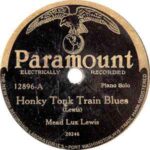
Honky Tonk Train Blues- Meade Lux Lewis (Paramount, 1927)
Although now regarded as a seminal classic of boogie woogie piano, “Honky Tonk Train Blues” didn’t have much impact when first released in 1930—two and a half years after Meade Lux Lewis had recorded it in Chicago, c. December 1927, according to discographies. Paramount Records allotted Lewis only one side of the single, pairing his instrumental with that of another pianist, Charles Avery. In the meantime, Pine Top Smith had come ouh with jis own boogie woogie in 1929, elevating him to the top of the genre. Lewis’ robust impression of a speeding train traveling on 88 keys did inspire legendary record man John Hammond to seek him out later to re-record the tune and eventually launch a boogie woogie craze headlined by Lewis, Albert Ammons and Pete Johnson.
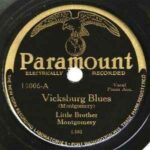
Vicksburg Blues- Little Brother Montgomery (Paramount, 1930)
Little Brother Montgomery’s classic “Vicksburg Blues”—the first of his many versions—derived from a piano anthem known as “The Forty-Fours” played by a number of Deep South musicians. Montgomery, a leading light among that crew, didn’t make it into the Paramount recording studio in Grafton, Wisconsin, until c. December1930, by which time Roosevelt Sykes and Lee Green had
both already recorded “44 Blues” in 1929. So Montgomery applied his rolling piano runs and trembling vocals to the same tune with a new set of lyrics immortalizing the Mississippi River town that was one of his frequent bases: “Vicksburg on a high hill, Natchez down below.” Montgomery credited Long Tall Friday, Robert “Dehlco” Johnson and Earnest “44” Johnson as early exponents of the theme.
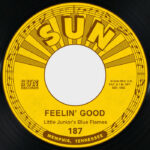
Feelin’ Good- Little Junior, Parker’s Blues Flames (Sun, 1953)
Little Junior’s Blue Flames’ “Feelin’ Good” was a wailing, electrified reinvention of John Lee Hooker’s “Boogie Chillen.” Recorded at Sam Phillips’ Memphis Recording service on June 18, 1953, and issued n Phillips’ Sun label, the houserocking showpiece was highlighted by Junior Parker’s potent vocal delivery and the impressive fretwork of 18-year-old Floyd Murphy, who had replaced his brother, Blues Hall of Famer Matt “Guitar” Murphy, in the Blue Flames. Murphy claimed to have learned the riff from a guitarist in the Hill Country of North Mississippi. “Feelin’ Good” served as a model for rocking guitar boogies in the work of Magic Sam and others.
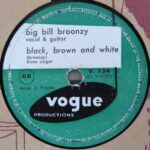
Black, Brown and White- Big Bill Broonzy (Vogue, 1951)
In Big Bill Broonzy’s lifetime it was rare or a Black artist to be as outspoken about topics such as job discrimination and Jim Crow as he was when he recorded “Black, Brown and White.” His theme of racial injustice, performed alone with his guitar, was so controversial in the 1950s that no American companies released any of his versions until after he died in 1958. His September 20, 1951 recording for the Vogue label in Paris was the first to publicly reveal the refrain: “If you was white, you’d be alright, If you was brown, stick around, But as you’s black, oh, brother, Get back, get back, get back.” In November he recorded the song in Chicago for Mercury, but the company withheld it until it came out on its Big Bill Broonzy Memorial LP in 1963, and even then, under the title “Get Back.” A 1956 rendition on Folkways was released in 1960. He had recorded it for folklorist Alan Lomax in 1947 at the historic Blues in the Mississippi Night session (on which his identity was disguised as “Natchez”) but the song remained buried until Rounder issued it on CD in 2003. Several live versions from European concerts in the 1950s are also now available.
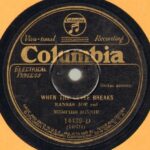
When the Leavee Breaks- Kansas Joe & Memphis Minnie (Columbia, 1929)
Millions of listeners heard “When the Levee Breaks” when Led Zeppelin recorded it in 1971, inspiring some to search for the original version recorded for Columbia and available at the time on a Memphis Minnie reissue album on Chris Strachwitz’s Blues Classics label. The singer on the record was actually Joe McCoy, aka Kansas Joe, who joined Minnie in the record’s splendid two-guitar interplay. The June 18,1929 session in New York City was the first for the couple, who would marry in 1930. The song was inspired by the devastating Mississippi River flood of 1927, when the levee near Minnie’s hometown of Walls, Mississippi, did indeed break. It was not so topical by 1929, however, and Columbia chose to promote the flip side, “That Will Be Alright,” in its advertising.
We invite you to listen to The Blues Foundation Podcast!
Season 1: Blues Hall of Fame centers on a different Blues Hall of Famer, and explores a specific moment in their life.
Produced by Beale Street Caravan. Written by Preston Lauterbach. Voiced by Guy Davis.
LISTEN NOW




Blues Hall of Famers Speak the Blues
Bobby Rush
Elvin Bishop
Become a Member
Becoming a member of The Blues Foundation gives you an opportunity to be personally connected to a blues community where you will experience a vast amount of resources, information, news, views, insight, and activities not available anywhere else. You will become part of this fantastic Blues family which shares your love of the Blues, past, present and future.
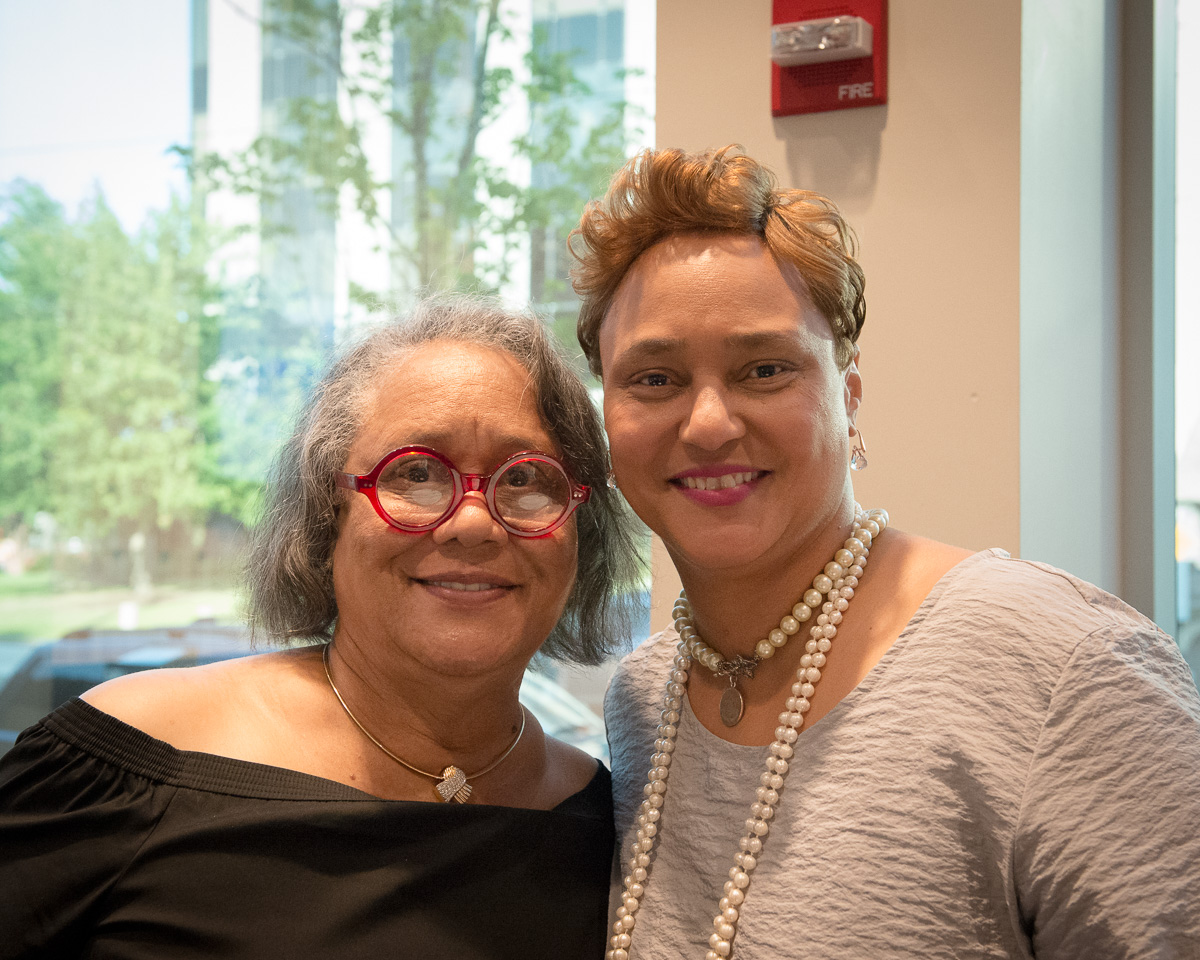
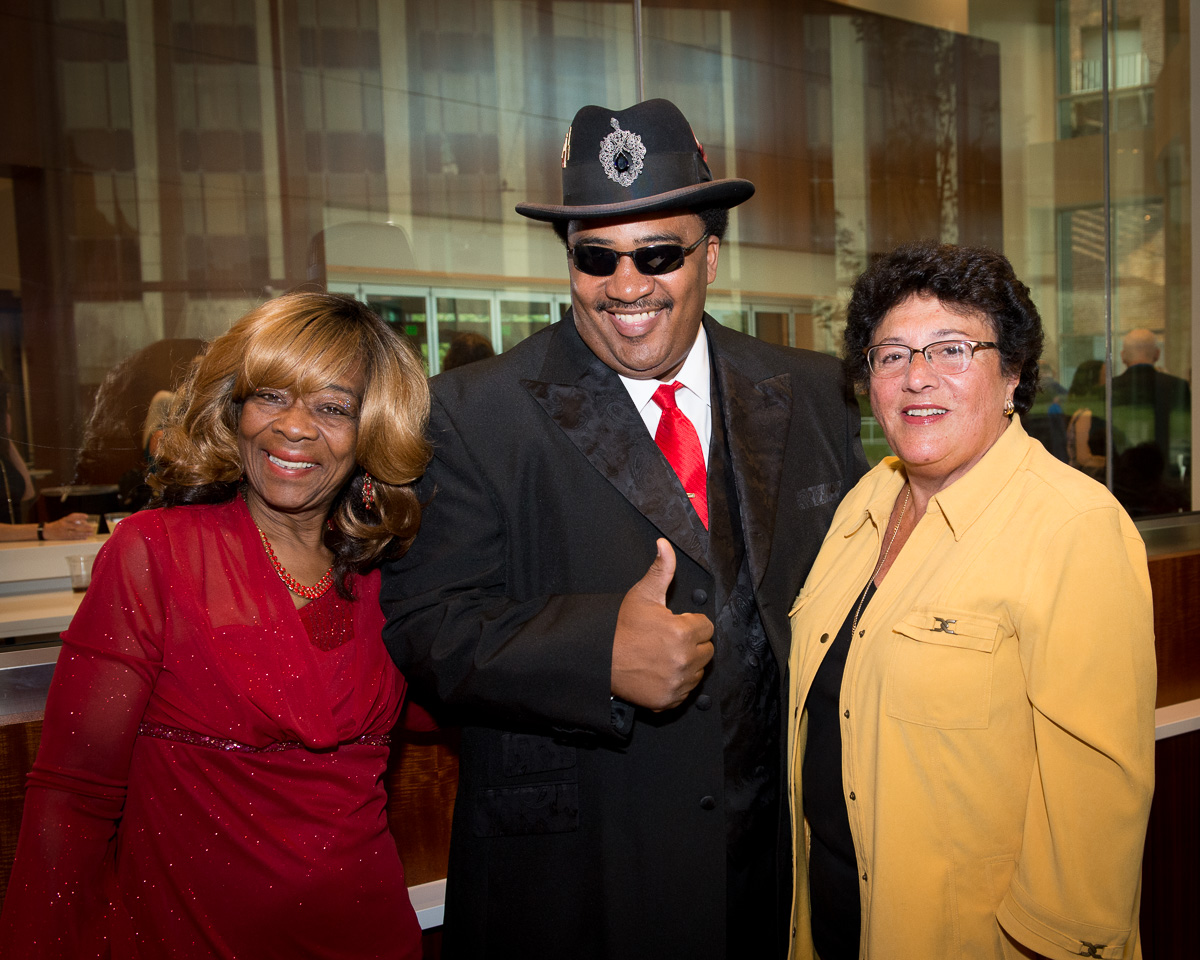
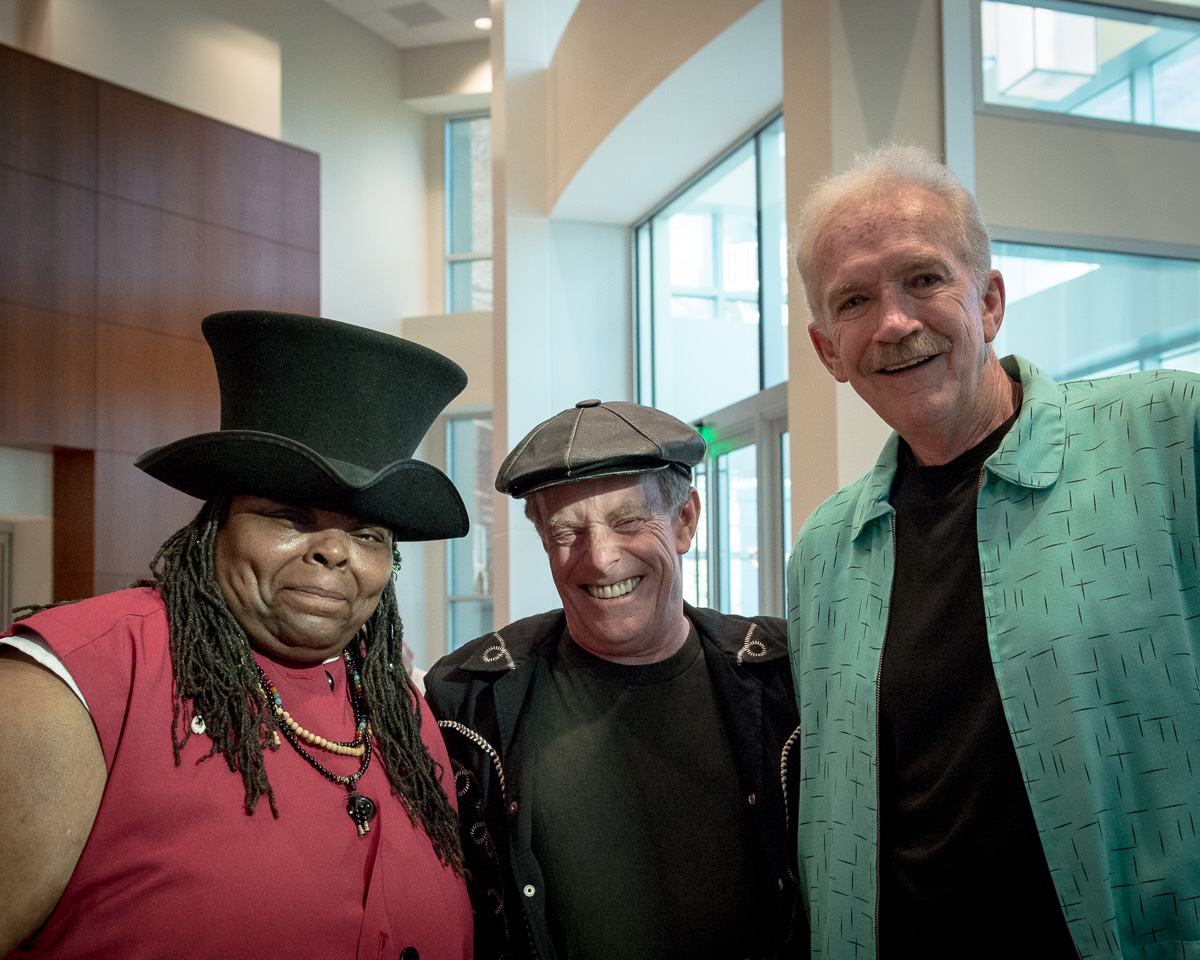
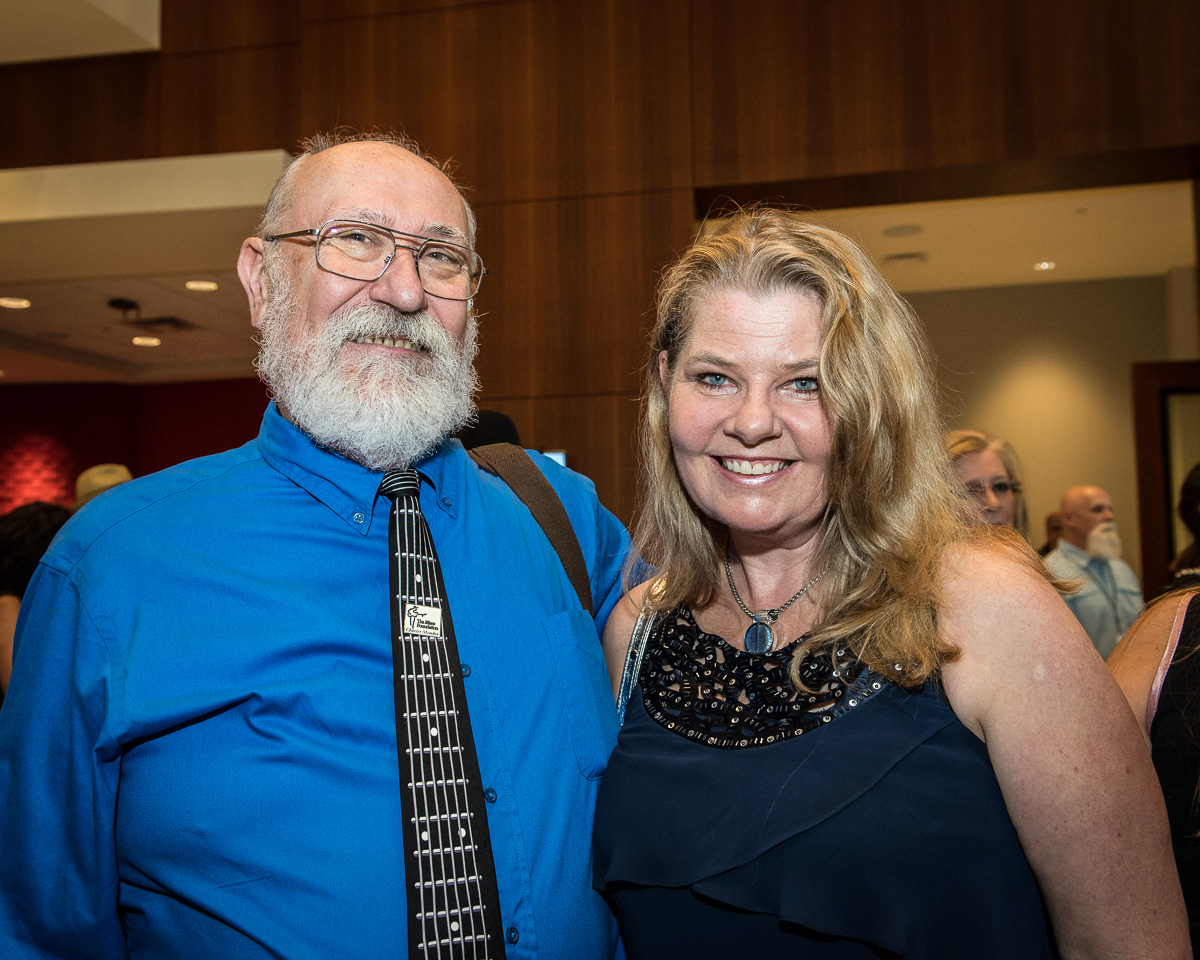
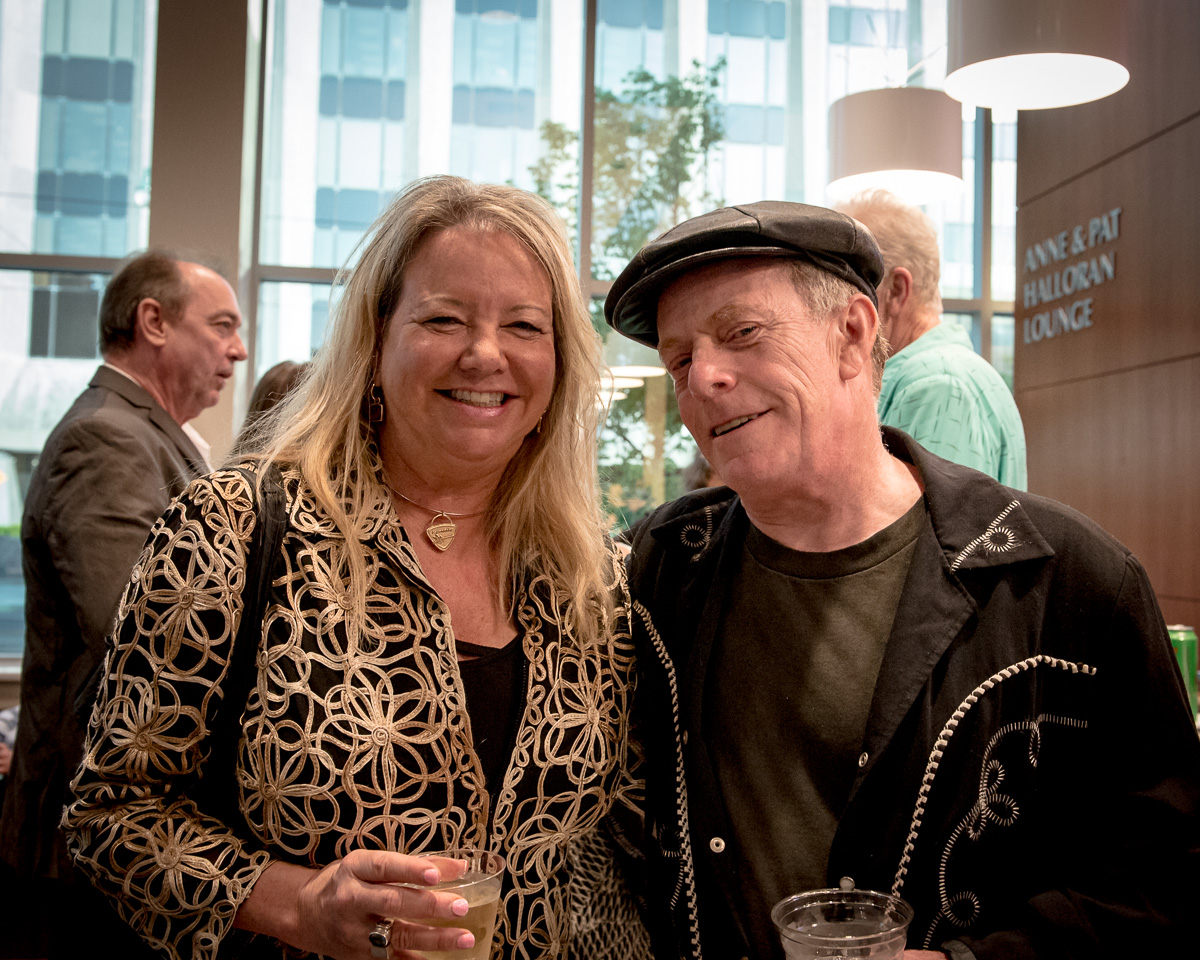
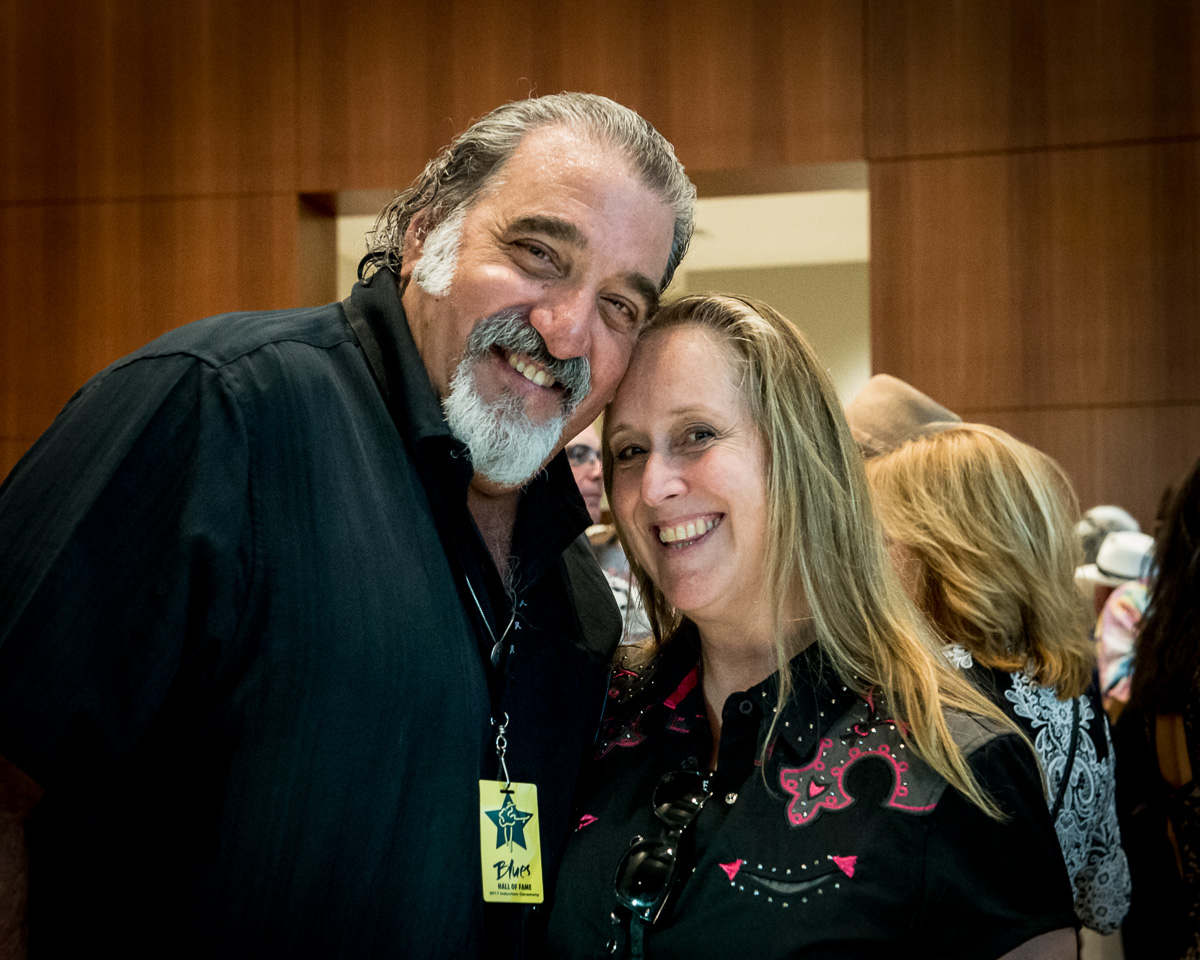
Photos by Roger Stephenson
Donate
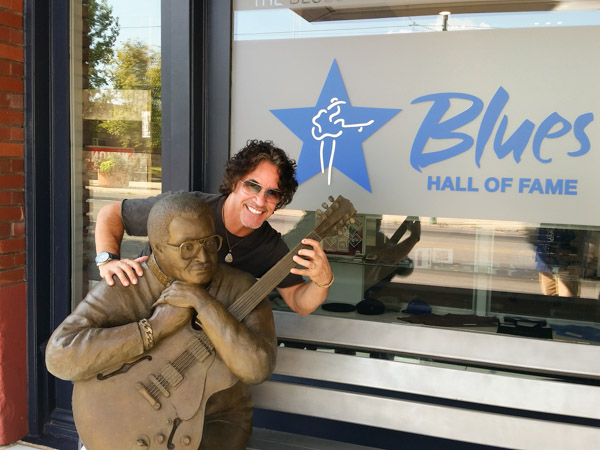
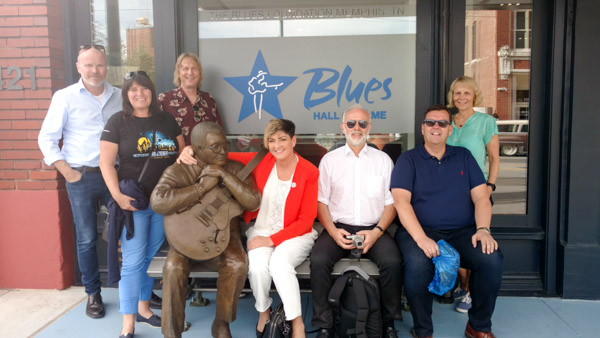
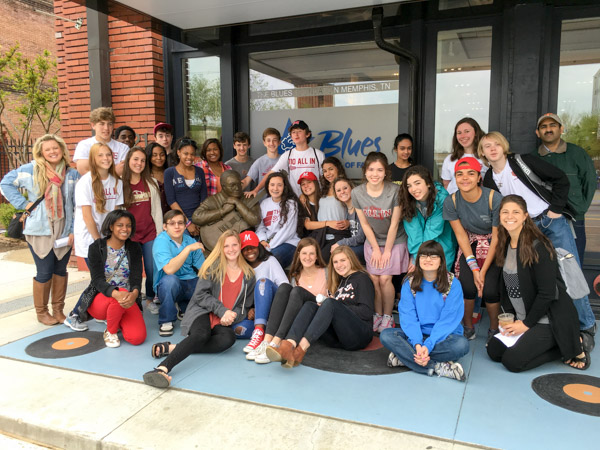

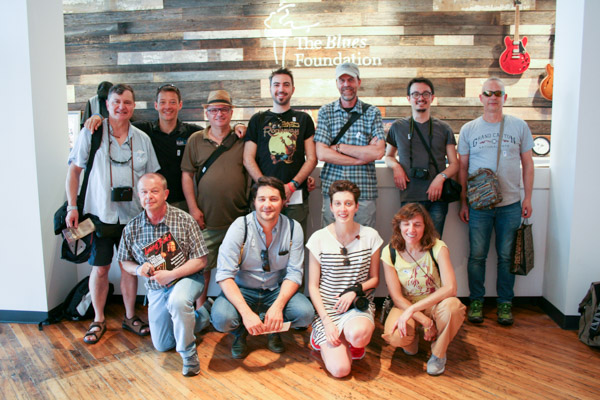
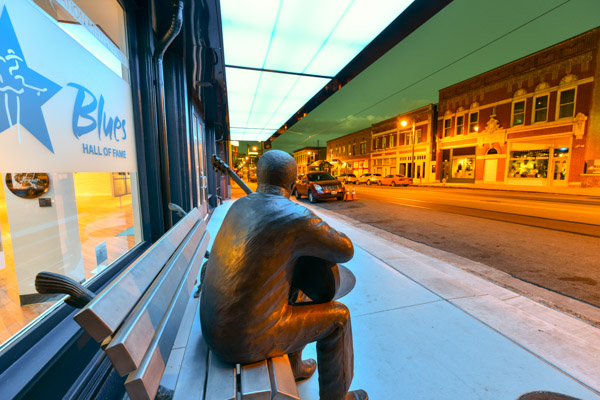
Since 1980, The Blues Foundation has been inducting individuals, recordings, and literature into the Blues Hall of Fame, but until recently there has not been a physical home to celebrate their music and stories. Building the Blues Hall of Fame Museum has fulfilled one of our key goals – The creation of a space to honor inductees year-round; to listen to and learn about their music; and to enjoy historic mementos of this all-American art form. The new Blues Hall of Fame is the place for serious blues fans, casual visitors, and wide-eyed students. It facilitates audience development and membership growth. It exposes, enlightens, educates, and entertains. The Blues Hall of Fame opened May 8, 2015.